Tuesday, December 22, 2009

Spring's Gift

I envy the sand that met his feet
I’m jealous of honey he tasted sweet
Of birds that hovered above his head
Of spiders who spun their sacred web
To save him from his enemies
I envy clouds formed from the seas
That gave him cover from the heat
Of a sun whose light could not compete
With his, whose face did shine so bright
That all was clear in blinding night
I envy sightless trees that gazed
Upon his form completely dazed
Not knowing if the sun had risen
But felt themselves in unison
With those who prayed, and fasted too
Simply because he told them to
With truth and kindness, charity
From God who gave such clarity
His mercy comes in one He sent
To mold our hearts more heaven bent
I envy all there at his side
Who watched the turning of the tide
As truth prevailed and falsehood fled
And hope restored life to the dead
Men and Women through him found grace
To seek together God’s noble face
I envy the cup that gave him drink
His thoughts that helped us all to think
To be one thought that passed his mind
Inspiring him to act so kind
For me this world is not one jot
If I could simply be a thought
From him to God throughout the ages
As revelation came in stages
I pity all who think it odd
To hear him say there is one God
Or he was sent by God to men
To hone their spirits’ acumen
It’s pride that blinds us from the sight
That helps good men to see his light
He taught us all to be God’s slaves
And he will be the one who saves
Humanity from sinful pride
Muhammad has God on his side
So on this day be blessed and sing
For he was born to grace our Spring
With lilies, flowers, life’s rebirth
In a dome of green like his on earth


To be remembered, to be missed


"Socialize with people in such a manner that when you die, they should weep for you and as long as you live, they should long for your company."

- Imam Ali, may Allah ennoble his countenance 

To be missed, to be remembered
Fondly. Long after physical departure 
Is a sign of chivalrous character.

- Khaadim 


Friday, December 18, 2009

Finally we have found him!

As if my love for Google was not enough, it has increased manifold. I have found an English language book on Abdel Kader Al Jaizari. It is free to read and download!

Also, another book is available on amazon.com, titled: Commander of the Faithful: The Life and Times of Emir Abd el-Kader (1808-1883).

Thursday, December 17, 2009

Pray upon the Prophet, and your Lord will solve it

"Sheikh Saleh al-Maghamsee, the Imam and Khateeb of Masjid Qubaa’ in Madinah, was asked about a personal story that occurred to him. When asked on live television by a caller, he gave the following account (see the original video in Arabic).

The Sheikh’s Story

In the Sheikh’s words:
Well, it’s a personal story, but I’ll tell it out of honor for him [the Sheikh who asked], and out of honor for your audience. It’s a very important point, that’s not connected to myself, but to the point of the story…I underwent open heart surgery. And the next day, I woke up from the surgery, and the stitching and everything had been completed. The doctors were passing by, those supervising patients in the intensive care unit. And this was immediately after my waking up from the anesthetic, after 24 hours from the operation.

The nurse in charge of me noticed a matter – something in the blood – so he informed the doctor on duty. So the doctor asked another doctor, and this other doctor asked a third doctor, until there were nearly 14 people, doctors and others in charge of patients, gathered.

They were baffled, they didn’t know what to do – all this while I was unaware. I mean, I could see their faces changing, their faces were fearful. The monitors were behind my head, behind the bed, and they were giving off unpleasant signals. I couldn’t see the signals, but I could see it in their faces.

So they called Doctor Adam, a successful Sudanese doctor, to come and see. He looked – and he’s a doctor, so he read the monitors in his way – and it became apparent to him that there was blood gathered on the heart after the operation.

He said to me, in these words, “Wallahi Sheikh Saleh, we need your consent to return you to the operation room to open your heart again. There’s blood collected on the heart that has to be removed.”

Of course, this news came to me like a bolt of lightening. But Allah guided me at the time to say – well, let me be clear. The first time, I had hope that the operation would be successful; but this time, fear had begun to enter me, so I said, let me say the shahada – 
Ashhadu an la illah illa Allah, wa ashhadu anna Muhamaddan Rasool Allah — and I signaled with my head that I consented.

So he had them detach the devices in the intensive care unit to prepare me, and he put on a mask, and they went to the operating room to prepare things.

At this instant – there was a Lebanese (female) nurse standing on my left, and Allah guided her to say – she said, “Saleh,”  “Sheikh,” she doesn’t really know, she said “Brother,” or “Oh Saleh,” or whatever she said – 
But she said – and listen to this: “Pray upon the Prophet, and it will be solved” (salli ‘ala an-Nabi, wa hiya tufraj). And so I said, instinctively, like anyone would, “Allahumma salli ‘ala Muhammadin wa ‘ala aali Muhammad,” like that exactly.

Wallahi, I said it, and all the blood came down, and the monitors began changing. The people there were anxious – what happened, what changed, what, what? The matter had changed. They called back Doctor Adam again, so he came. When he saw the monitor screen, and he saw the blood, he said, “Sheikh Saleh, what we wanted to do for you and rid you of, Allah has rid you of from above seven skies.”

Of course, now, the issue is not about Saleh. It’s an issue of this woman whom Allah guided to say what she said – and this is in confirmation of the saying of the Prophet
salla Allahahu alayhi wasallam to Ubayy, when Ubayy said, “Should I make all my du’aa [sending salam] for you?”, and the Prophet said: “Then your concerns will be taken care of.”**

So Allah took care of our concerns because we prayed upon the Prophet salla Allahu alayhi wasallam. But like I said, this has nothing to do with me, it has to do with the success Allah granted this woman in saying what she did, so that we shouldn’t think ill of Muslim women. I mean, whoever saw her appearance and her dress, might have thought this woman did not know Allah even as much as the blink of an eye. Even so, I’m the one known as the Imam and Khateeb at Qubaa’, and it didn’t occur to me to say this word. But she advised me. She said to me, “Listen,” with such gentleness and such sympathy, as if my situation saddened her, because here I was being returned to the operation when I was happy to have just left it. So she said, “Pray upon the Prophet, and your Lord will solve it.” She said it in her dialect, and I’m not adept at her dialect, but she said, “And your Lord will solve it.


And Allah jalla wa ‘ala solved it, alhamdulillah for His bounty."


This was forwarded to me. 

Tuesday, December 15, 2009

Ibn Ata'illah on Affliction

He has afflicted you from every direction in order to pull you back to the Directionless.
Maulana Rumi


Ibn Ata'illah said:
You will perhaps find a benefit in distress which you have not been able to find in fasting nor in prayer; therefore when it descends upon you, defend yourself no longer and do not be concerned with searching for some remedy, lest you drive away the good which comes toward you freely, and give up your will entirely to your Lord; then you will see marvels. [p. 33]


You who are "poor" (fuqara), if you wish that your wind may prevail over all winds and all adversaries, then be constant in contemplating your Lord while He is trying you, for He will change your ignorance into knowledge, your weakness into strength, your helplessness into power, your poverty into wealth, your lowliness into glory, your loneliness into intimacy, your remoteness into nearness - or, in word, God, be He exalted, will cover over your qualities with His qualities, for He is generous and bestows immeasurable graces. [p. 40]


Excerpts taken from a scholars blog, unfortunately, I can't remember his name and blog. He had translated Ibn Ata'illah's pieces above. 

Monday, December 14, 2009

Tombstones of a Sahaba and Tabayeen?


Translation
In the name of God, Most Gracious, Most Merciful
Oh God, when you gather
all the people (those of old and those of later time)
to the appointed day (Meeqat)
make Hafs bin Umar one of the companions of Mohammad
Peace be upon him
Amen
God of the two worlds


Anyone have any information on this companion?


Translation
In the name of God,
 
Most Gracious, Most Merciful
Verily in
the messenger of Allah ye have a good
example for him who looketh
unto Allah and the Last Day
 
and remembereth Allah much. Oh God
 
keep Abdullah bin Mohammad
bin Abdullah bin Hassan
al-Hashmi among the youths
 
of Heaven - Amen


I think this tombstone may belong to a direct descendant of Imam Hasan. Imam Hasan had a son, Hasan Muthana who had one son: Abdullah, who had four sons -> Muhammad, Ibrahim, Idris (who went west to North Africa), and Sulaiman (who went east to Persia). The individual mentioned above could possibly be the son of Muhammad. Also, this tombstone is from the Fifth century hijra; thus, adding more substance to this claim.


NOTE: The details about Hasan Muthana's sons come from a Shia website. They in some cases have conflicting information on the number of sons/daughters etc. But, this info sounds reliable, as Idris did go to the West and was a Hasani. Interesting point to note, the author of the text claims to be a descendant from Sulaiman (who went to Persia). In contrast, as far as I know, most Idrisi Syeds are Sunnis in North Africa. As a Sunni, I am inclined to think that Syeds in Persia may have converted to Shia school due to the reign of Safavids. 


Allah knows best.


Destinations hail sincere seekers after Truth at the very outset

To soothe the sincere pain of distance and longing of some, read Wasif Ali Wasif:


"The search for Truth, for the Truth conscious, for the men of heart, for the Imam of the age, or for the intimate of mysteries, involves no geographical journey. There is a great difference between the voyages of Sindbad and the travels of the seeker after Truth. The ego should attain to a state of self-realization before it embarks on its journey toward Truth. The clearer the mirror of the heart, the easier for it to receive the flashes of Truth. Approach to Allah is though prostration, with your brow brought  low. Prostration is here below and connection on High. Divine blessings on the Prophet (SAW) are invoked here and accepted there. The first thing therefore is self-reformation, enabling yourself to know what the radiance of Truth really means. Abu Jahl sees the prophet (SAW) but cannot have access to him (SAW), whereas Uawys of Qaran has access to him (SAW) although he has never been near him (SAW) physically. Destinations hail sincere seekers after Truth at the very outset."

Saturday, December 12, 2009

Taken by Mercy

Allah addressing his sinless angels …
“Love’s affair is truly strange -
it’s thrown to them without a cause.
“You be happy in your sinlessness -
they have been taken by My Mercy."

Ahmad Sam'ani


The people of God, which is I, and which is you.

We shall see,
For certain we shall see,
the day that has been promised us,
on the tablet of eternity.

When these high mountains

of tyranny
will drift away like wisps of cotton.

And beneath our feet, the feet of the oppressed,

the earth will tremble.
Lightning crack above the heads of kings,
And thunder roar.
Yes, we will see that day.

When from the abode of God (Kab'a),

false idols will be driven out,
And we, the pure of heart,
long forbidden from the sacred place -
We, yes, we will be seated on those high cushions.
All thrones overturned.
Crowns trampled underfoot.

Remaining only the Name of God,

That which is absent, but present too,
That which is the spectacle, and also the beholder.
Then will rise the cry - I am the Truth (ana al haq)
That which is I,
And which is you.

And then will reign

The people of God,
Which is I,
And which is you.

Yes we shall see,

For certain we shall see,
We shall see.


By Faiz Ahmed Faiz (translation found here)


Faiz wrote this ghazal, which was later sung by Iqbal Bano under the regime of Zia ul Haq. This was a time when Faiz Ahmed Faiz was banned and imprisoned for criticizing the dictatorship, and also for his marxist/communist beliefs. Iqbal Bano showed courage in singing his verses; thus, indirectly attacking the dictatorship.
It has been said that Faiz Ahmed Faiz was not an atheist. See this: http://www.dawn.com/wps/wcm/connect/dawn-content-library/dawn/the-newspaper/local/faiz-was-neither-an-atheist-nor-a-traitor-agha-nasir


Listen to Iqbal Bano.

Wasif Ali Wasif on Contentment, Self Pity

I came across this individual, Wasif Ali Wasif, on Chaiwala's blog.

Taken from: 
http://wasifaliwasif.org/waw/
"To sorrow over your lot, to have sympathy for yourself, to prove yourself pitiable among people, is no man with more that he can bear. Ailing and feeble spirits always complain whereas healthy souls give thanks. To criticize life is to criticize the Creator, and such criticism deprives on of faith."
"I never saw a wild thing sorry for itself. A small bird will drop frozen dead from a bough without ever having felt sorry for itself"
D.H. Lawrence

Friday, December 11, 2009

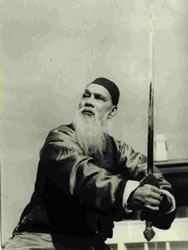
"Oh God, how could that be. Such a powerful Chinaman!"


"Another time, the mosque in Qinzhou had two long, beautifully carved doors that were antiques from the Ming dynasty. The story engraved on the doors described the early Moslems' life. For generations, the Moslems cherished and cared for the doors. The Germans heard about the antique doors and were greedy for the cultural treasure. They came and unctuously offered to buy the doors. To avoid a conflict, the priest asked for 16,250 pounds of pure silver. "That's too much," said the Germans. "We will pay you half." That worried the priest because he did not want to be the Moslem who would sell the nation's treasure. He called a meeting in the mosque. Wang Ziping suggested to the rest, "We shall all stay in the mosque and guard it. The Germans can't take the doors from that many of us."
Hearing this, the Germans planned strategies too. They thought that if they could get rid of, or embarrass, Wang Ziping they might have a chance to take the doors. The conflict ended with another weight-lifting challenge. The Germans wheeled in two 250-pound stone weights connected by a thick bamboo bar. "We heard you practice kungfu in this mosque, and the 'Qianjin Wang' is a usual visitor," the Germans said to the priest and the crowd. We specially brought these weights that no one has been able to lift for eighty years. We want to ask Wang Ziping to lift them. Everyone knew what was going on and held their breath for Wang Ziping. Heavy weights on a bare bamboo bar without fixtures would slide, creating difficulty or accident. Wang Ziping recognized the German's trick as they taunted him.
Wang Ziping could not wait any longer and stated, "Chinese kungfu is rich and varied. Foreigner, don't you taunt us." The crowd shouted, "Good, show them your power!" By then, it was a fight for the nation's pride. Wang Ziping bowed to the crowd, flipped away and intentionally landed on his back right in front of the weights. Then he extended his arms over his head, two large hands grabbed the bamboo bar and quickly pulled up the stones. People cheered. He bent his arms, then tossed the weights away from him. Suddenly, he threw up his legs and caught the weights with his feet. He gestured, and six young men came out. One lay down across the bar, facing away from Wang Ziping and supported by the weights and Wang Ziping' hands. Three more young men then got on top of him and on top of each other. Two more then stood on the bamboo bar. They modeled Stone Luohan (stone Budda) and Phoenix Emerging Its Wings. To the sound of long-lasting applause, the Germans nodded and disappeared. The doors were saved."


Mighty Majesty

Dawn to dusk I read Frost, Baudelaire
Longfellow among others. Enjoyed verses,
Written with rhyme, meter, depth, and care;
Then came time to put them on a hearse.


Salut! Distinguished poets. Go your way.
I come home full circle, I find new life;
I jolted from deep slumber have fell prey
To words that cut sharp my heart like a knife.


"The hour draws nigh and the moon is rent asunder"
Sung inhuman voice; words of such majesty.
Weighty words break my back and I ponder
the Author of this creative beauty.


Verses of love bore by the beloved;
Messenger of love carefully delivered.


-Khaadim


If interested in ghazal's, read this article, where I came across 54:1 of the Quran: "The hour draws nigh and the moon is rent asunder". 


Translation by Muhammad Asad:
"The Last Hour draws near, and the moon is split asunder!
But if they were to see a sign, they would turn aside and say, "An ever recurring delusion!"
Many translations exist, but none can ever do justice to Al Quran. As they often say, the Quran is "un-translatable". For a variety of translations visit Al-Tafsir.com.

Thursday, December 10, 2009

Celebrate me when I am gone


My dear, my ever fragrant rose
Why wither you in springtime?
In my absence lonely and forlorn.
Bloom.
 O rosy friend!
 Bloom.
O sweet scented one!
Wither not in gloom.


- Khaadim


Friday, December 4, 2009

Tempest

I was I, myself; before
I met that breath taking
beauty. She is a tempest!
My Friends warned me; yet her
Smile lured me. We met,
We mingled until I lost
Myself in her and then
She left; no not alone
But with my heart and soul.


To wise advice I heed no more.
Now lost in love that man of reason
I am no more.


Khaadim

Away from the Beloved's City


Have you seen a fish pulled out of sea?
Witnessed how it yearns to return?
Have you felt its pain when it twists and turns?
It's how my broken heart throbs ever since
Leaving my Beloved's City. I am
Weak at heart and cannot bear pangs
Of painful torturous separation.
Away from my Beloved, I shall
Suffocate like the fish pulled out of sea.


- Khaadim

Monday, November 30, 2009

Ottomon Defenders part 2

On the second Friday in April 1918 after the prayers in Madinah, a Turkish officer slowly ascended the steps of the pulpit, draped in the Ottomon flag. Omer Fahruddin Pasha (also spelt as Fakhri Pasha or Umar Fakhr ud-Din Pasha) was the general commanding Ottomons in Madinah. Halfway up the steps, the general turned to face the congregation, which included many officers and men. A witness described the scene like this - "Stillness reigned in the Mosque. Waves of amber and musk rose from the silver censers behind the railing surrounding the Apostle's grave. For a moment, the General's eyes seemed absorbed in the contemplation of the candles burning besides the mausoleum. Then he raised his right hand and declared 'Apostle of God, I will not abandon you'. Turning to the uniformed men he said "Soldiers, I appeal to you in the presence of the Apostle who lies in his grave, but hears the words spoken here. I invite you to engage yourselves to defend him, to our last cartridge and our last breath, no matter how strong our enemies may be. God help us, and may the Apostle's spiritual aid be with us!" You officers of the heroic Turkish army and you little Muhammads (appellation for Turkish soldiers) who are used to paying your debt to your faith with your lives, come, take with me this engagement before our Lord.'"


Immediately, the Turkish soldiers rushed towards the Prophet's (peace be upon him) grave to make their pledge.


The defense of Madinah from Arab forces had become next to impossible for the Ottomons as they besieged from all sides of the empire. Emil Esin in her book mentions that Jamal Pasha (Commander in Damascus) asked his men whether they should give up on Madinah. Mustafa Kamal Pasha, now known as Ataturk, replied that he did not want to go down in history as the man who abandoned Madinah. Ironically, he abandoned the religion! Emil Esin is Turkish and perhaps Ataturk is shown positively, or maybe he did actually think so back then.


Back to Fahruddin Pasha. This man was continued to ignore orders from his superiors to surrender - even that of the Ottomon Caliph. His men had started eating locusts due to shortage of food and supplies from Damascus. But, he was oblivious to his situation. He had started building and repairing the Mosque and other surrounding areas. Women and children had already evacuated the Holy City.


One night while Fahruddin Pasha was keeping long vigils, a group of officers overpowered his comrades and and came in to the Pasha's quarters. They begged him to surrender and end this senseless resistance, especially when they had received orders from the Caliph. Sharif Husain's party had specified that the surrender of Fahruddin Pasha was necessary and thus the officers forced him out, but he broke free from them and rushed towards the Apostle's grave and laid down his sword, thus claiming sanctuary.


Emel Esin writes, that unfortunately, Fahruddin Pasha lived in an age when Knightly behavior could be mistaken for lack of judgement. The broken-hearted man and now silent man was taken away to captivity and exile, watched by the crowds who shouted their farewells to him.


The last Ottomon was thus relieved of his watch in the Apostle's mosque. And an era came to an end.


More on Pasha and his picture: http://www.turkeyswar.com/whoswho/who-fahreddin.htm


More details of the event here, including the letter he sent to Sharif Hussein, and the vision he had of the Prophet (peace be upon him) : http://www.salaam.co.uk/knowledge/caliphs.php

Ottomon Defenders part 1

Around 1916, Sharif Husain's forces launched attacks on Turkish garrisons at Taif and Makkah. During this period, a young Turkish officer began to bombard the Sharif's palace in Makkah, when a stray shell landed in the  courtyard of the Ka'bah, and the curtains caught fire.

The Turks rushed out of the fort and managed to extinguish the fire, but the Makkans believed that this was a deliberate attempt at sacrailege and set upon them. The entire Turkish garrison was massacred and the body of the young officer was dragged through the streets.

(From Mecca the Blessed, Madinah the Radiant by Emel Esin. This book is a treasure and I was fortunate to have found a copy of it on Amazon. It is brief, but has enough details that an average person would not have read or known. Especially, the history following Ummayad attack on Makkah and Madinah.)

I cannot judge the Turkish soldiers who were massacred that day, but I feel - and it is just a feeling - that they were defending the Holy City from rebellion. A rebellion that must have been difficult to understand, especially in a day and age where rumors got around fast and where there were no reliable sources of information.

How ironic for them to have died at the hands of their fellow Muslims after having put out the fire that they had accidentally set. To have been considered sacrilegious when in fact they were wholeheartedly defending the sacred. Oh Fate, how cruel thou art!

Tuesday, November 24, 2009

Ali and the Angels


Ali and the Angels
"The Imam Ali, Lion of the Faith,
Have ye not heard his giving?
What he had the poor had,
for he held his gold and goods
As Allah's almoner. Ali it was
Who in the Mecca mosque at evening prayer-
Being entreated by some needy one -
Would not break off,
yet would not let the man
Ask him in vain for what he asked of God,
Favor and aid; wherefore - amid the words -
He drew his emerald, carved with Allah's
praise,
From his third finger, giving it; and prayed
With face unturned ...
by Edwin Arnold


Above is an excerpt from Ali and the Angels by Edwin Arnold, which appeared in Seasons Journal . Edwin Arnold praises the two events in Imam Ali's life:
1. Charity while bowing in prayer
2. His business transaction with Angels after having helped a needy person.


The first one is actually mentioned in the Quran:
"Your patron is God only, and His Messenger, and the believers who establish prayer and pay the alms, bowing down"
Quran (5:55) Translation by Royal Ahl-e-Bayt Institute (from Altafsir.com)
Commentary:
"He (Prophet peace be upon him) saw a beggar in the mosque and he asked him: ‘Did you get something from anyone?’ The beggar replied: ‘Yes, I got a ring of gold’. The Prophet asked him: ‘Who gave it to you?’ The beggar said: ‘That person who is standing in prayer’, and he pointed to ‘Ali ibn Abi Talib. The Prophet asked him again: ‘In which position did he give it to you?’ The beggar said: ‘He gave it to me while bowing in prayer’."
Al Wahidi in Asbab Al Nuzul (for details see link).

Thursday, November 19, 2009

what ails thee ...

"O thou grave, to thee I resort for paying homage to thee.
O thou, the repository of my beloved, thou answer me not.
O thou beloved tomb, what ails thee-
Thou respondeth not to my supplications.
Art thou of humor, because of the love that I bear thee?"
Imam Ali r.a.


One of the many verses by Imam Ali for his honorable wife.
Book of Character by Camille Helminski